


1. Start with one tiny daily target
Pick the smallest version of the habit that still counts. For example, 10 minutes of movement, one page of reading, or one glass of water after waking up. This protects consistency when motivation is low.
2. Decide exactly when and where you will do it
Attach each habit to a trigger: after coffee, after lunch, or before bedtime. Daily habit tracking works best when the action is anchored to an existing routine.
3. Track completion immediately
Log the habit as soon as you complete it. Delayed logging creates memory gaps and missed entries. If possible, keep your tracker on your home screen for low-friction check-ins.
4. Add one sentence of context
Write a short note such as "done before meetings" or "low energy, still completed minimum." Context explains why habits succeed or fail and helps improve your system faster.
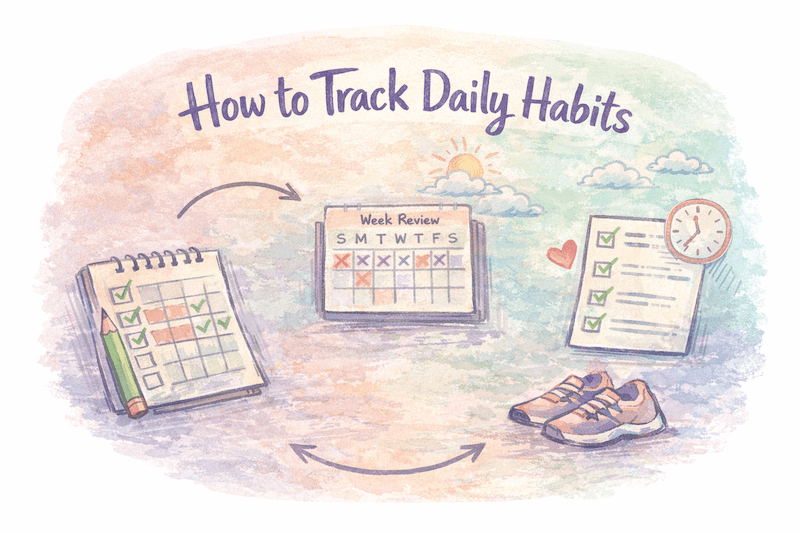
5. Run a weekly review
Once a week, check what slipped and why. Adjust reminder timing, lower targets, or change frequency instead of deleting the habit immediately.
Example: daily habit tracker setup (15 minutes)
- Create 3 daily habits only: one health, one focus, one recovery habit.
- Add reminders at realistic times, not idealized times.
- Track one measurable habit with units (minutes, steps, liters).
- Log a one-line note for each completion for the first week.